Let me say this upfront —
law was never meant to scare founders.
It was meant to protect power, ownership, and value.
Yet, over the years, law has been packaged as something intimidating, complicated, and best avoided until there’s a crisis. I see this every day — founders building fast, women leaders scaling bravely, MSMEs working relentlessly — all while treating law like an unwanted interruption.
That mindset is expensive.
In 2026, law is not a cost centre.
It is not paperwork.
And it is definitely not fear.
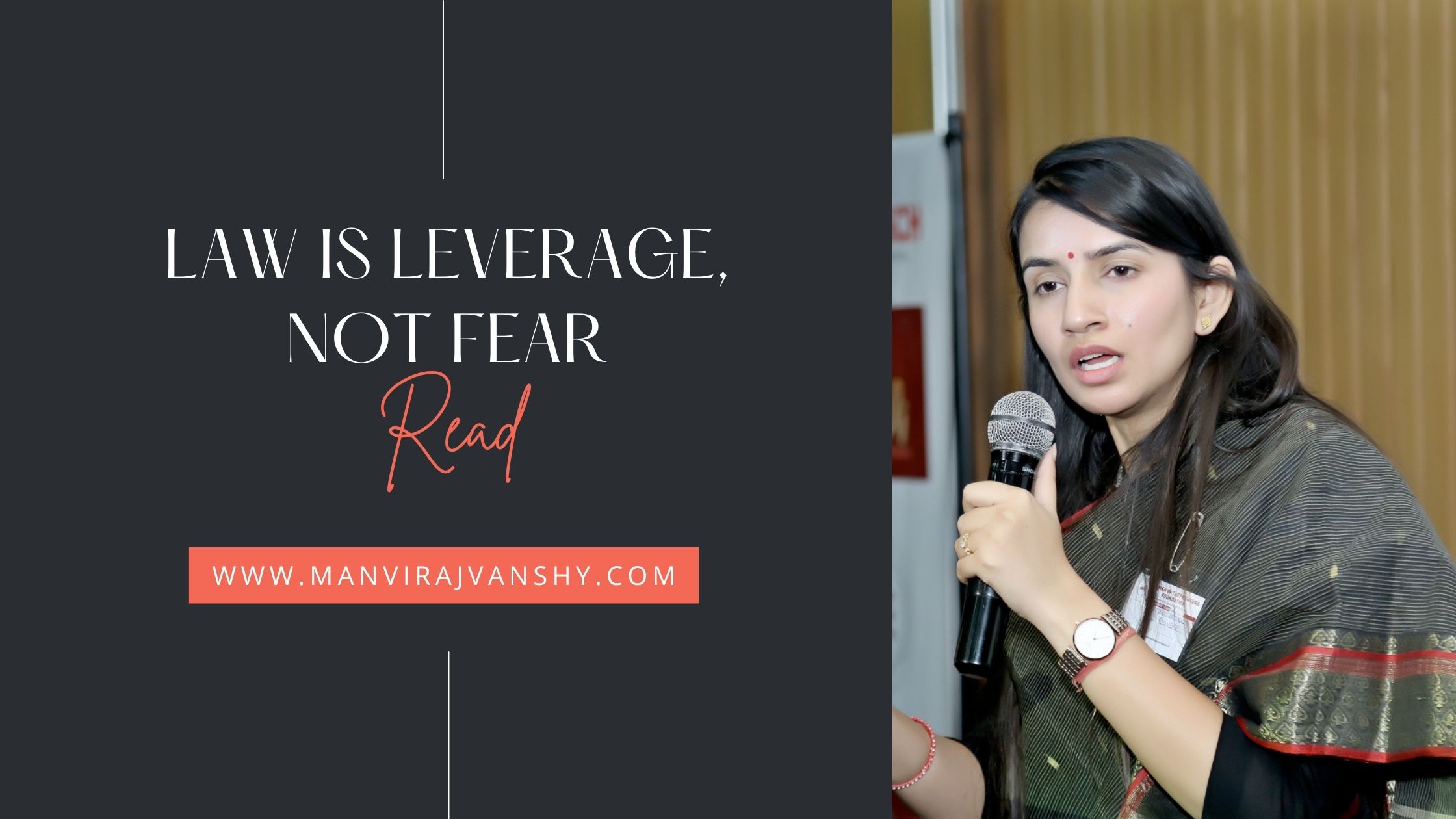
Law is leverage — if you know how to use it.
Why I Say This With Certainty
I work closely with founders, professionals, and business owners across stages. And there’s a clear pattern:
Those who understand the law early
→ grow with confidence.
Those who ignore it
→ pay for it later — in money, time, reputation, or control.
This isn’t theory. It’s lived reality.
Law Does Not Slow Growth — It Makes Growth Sustainable
One of the biggest myths I hear is:
“Law will slow us down. We’ll deal with it once we scale.”
But here’s the truth no one tells you:
Unprotected growth is fragile growth.
Law helps you:
- protect what you create
- define what you own
- prevent disputes before they erupt
- scale without constant firefighting
Every serious investor, partner, or global collaborator looks for legal clarity — not because they enjoy compliance, but because value without protection is unreliable.
Law doesn’t stop momentum.
It anchors it.
In the AI Economy, Law Decides Ownership
AI has changed how we build businesses.
Today, AI can:
- generate brand names and logos
- create marketing campaigns
- design products
- analyse customer behaviour
But here’s the uncomfortable question founders avoid:
Who owns what AI creates?
AI can create at speed — but only the law decides ownership.
If you don’t understand:
- IP ownership
- licensing rights
- data usage boundaries
- attribution and liability
You may be scaling assets that are not legally yours.
In the AI economy, ignorance isn’t innocence.
It’s exposure.
And this is exactly why legal clarity becomes leverage.
MSMEs and Startups: You Are Not “Too Small” for Law
Let’s call this out plainly.
MSMEs are often told:
“You’re too early for legal structuring.”
That advice is outdated and dangerous.
In India alone, MSMEs:
- run into crores in number
- contribute nearly one-third of GDP
- form the backbone of exports and employment
These are not “small” players.
They are economic engines.
Yet many operate without:
- trademark protection
- contracts
- IP strategy
- data compliance
This doesn’t make them agile.
It makes them vulnerable.
The moment MSMEs and startups treat law as leverage:
- brand value increases
- disputes reduce
- scaling becomes smoother
- investor conversations change
Law doesn’t make you rigid.
It makes you credible.
For Women Founders, Legal Clarity Is Power
I speak to women founders every week — brilliant, capable, visionary.
And yet, many hesitate to:
- assert ownership
- negotiate firmly
- enforce rights
- question unfair terms
Not because they lack intelligence —
but because law has been made to look intimidating.
Here’s what I know for sure:
The moment a woman understands her legal position, the power dynamic shifts.
Contracts stop feeling scary.
Negotiations become balanced.
Boundaries become enforceable.
Law is not aggression.
It is self-respect written into structure.
Data Protection Is Not Bureaucracy — It’s Trust Capital
With the Digital Personal Data Protection Act, 2023, the rules have changed.
Data is no longer something businesses casually collect.
It is:
- regulated
- consent-based
- accountable
Your customer data, user profiles, mailing lists, analytics — all come with responsibility.
Businesses that understand this early:
- build trust
- reduce risk
- strengthen brand credibility
Data compliance is not about fear of penalties.
It is about earning legitimacy in a digital economy.
Intellectual Property Is Not Optional — It Is Wealth
Your brand name, logo, product design, processes, content — these are not just creative outputs.
They are assets.
And assets without protection don’t build wealth.
I’ve seen founders lose:
- brand names they built for years
- market goodwill
- expansion opportunities
Simply because protection came after popularity.
IP is not paperwork.
It is capital strategy.
Contracts Are Not Formalities — They Are Strategy
Every time someone says:
“Let’s not complicate this with contracts.”
What they really mean is:
“Let’s leave this open to interpretation.”
And ambiguity is the breeding ground of disputes.
Contracts:
- clarify expectations
- define ownership
- manage risk
- protect relationships
They don’t signal mistrust.
They signal professional maturity.
Why I Keep Saying: Law Is Leadership Language
The founders and leaders who scale sustainably are not fearless.
They are prepared.
They understand that:
- law makes businesses predictable
- predictability builds trust
- trust attracts capital, partners, and opportunity
That is leverage.
My Stand Is Clear
I don’t believe in selling fear through law.
I believe in using law to:
- protect ambition
- secure ownership
- empower leadership
- build long-term value
So if you take one thing from this, let it be this:
Law is not a wall.
It is a lever.
And the sharper your legal clarity, the higher your business can climb.
In 2026 and beyond, success will belong to those who stop fearing the law — and start using it strategically.
That is where real power lies.