Let me say this upfront —law was never meant to scare founders. It was meant to protect power, ownership, and value. Yet, over the years,…
Advocate | Author | Supreme court of India
Let me say this upfront —law was never meant to scare founders. It was meant to protect power, ownership, and value. Yet, over the years,…
Let’s normalize something first! A trademark objection is not a rejection.It is the Registry asking you to clarify, correct, or strengthen your application. And if…
In today’s digital world, your face is no longer just your identity. It is data.It is value.And increasingly, it is vulnerable. With AI-generated ads, deepfakes,…
Let’s start with a truth most founders don’t hear early enough: Your brand is what people recognize.Your trademark is what the law protects. They are…
In 2026, the world will not just be digital — it will be intelligent, automated, and regulated. And if you are a founder, professional, or…
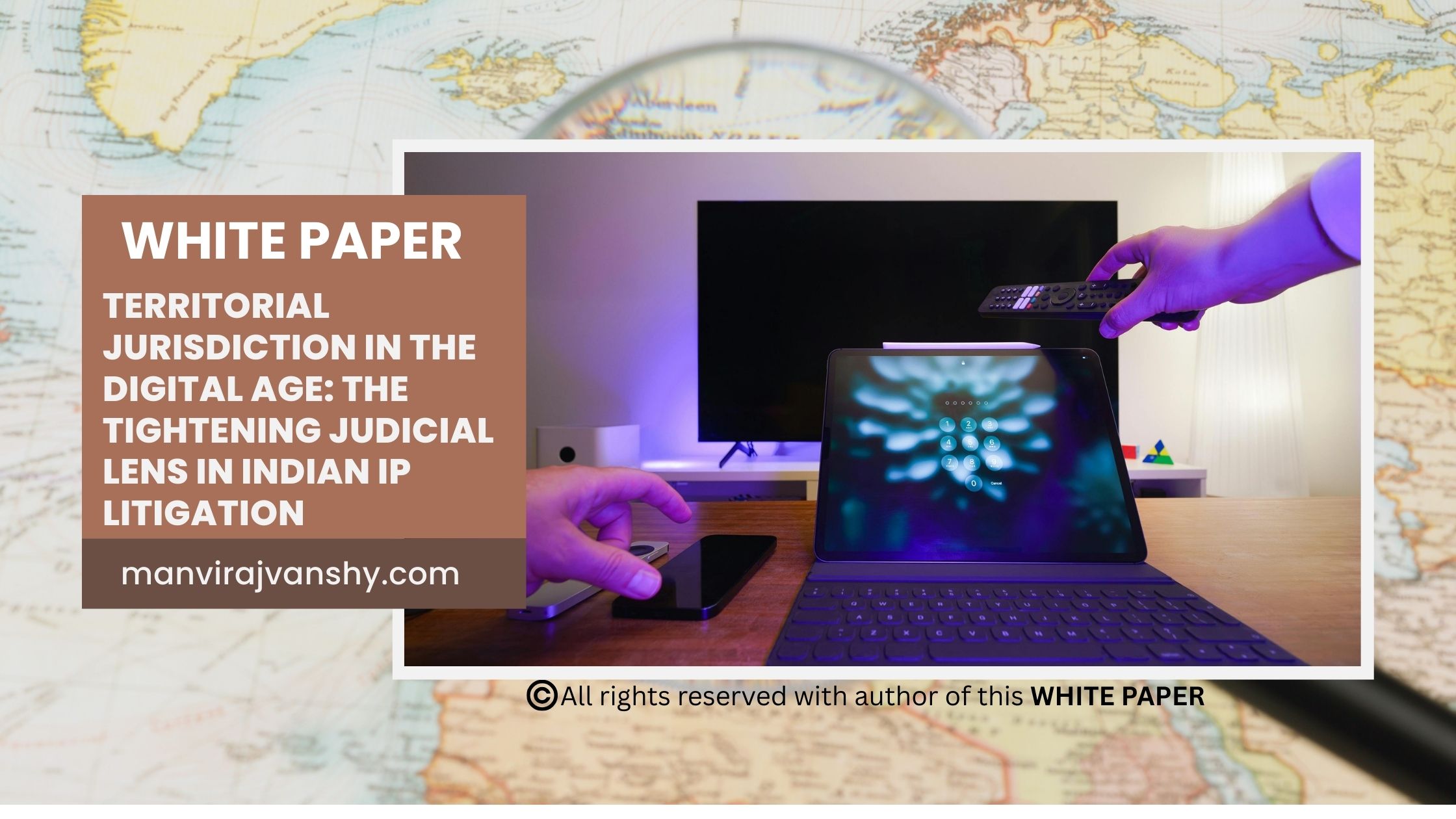
Indian courts are steadily refining the law of territorial jurisdiction in intellectual property disputes, particularly in the digital domain. Earlier, plaintiffs often invoked Section 20 CPC read with Section 134 of the Trade Marks Act, 1999 and Section 62 of the Copyright Act, 1957 to argue that mere accessibility of an infringing website sufficed to ground jurisdiction. The judiciary, however, is moving away from this expansive view, recognising that sublato fundamento cadit opus—when the foundation is weak, the case cannot stand.
Recent rulings insist on a more substantial nexus: purposeful targeting of consumers, commercial transactions within the forum, or demonstrable injury. In effect, the courts are rejecting the “access test” in favour of an “effects test.” This shift balances ubi jus ibi remedium—the right to seek remedies—with the need to prevent multiplicatio litium, or forum shopping.
By emphasising intent and impact over mere accessibility, Indian jurisprudence is evolving towards a doctrine of “digital territoriality,” aligning with global trends while addressing the unique challenges of a borderless internet marketplace.
Most people think citizenship is like getting a tattoo — once inked, it stays forever. But under Indian Law, it isn’t quite so permanent.
The Core Essence At its heart, this case was never about alcohol brands. It was about how far one can stretch trademark rights over a…
Imagine going into surgery, trusting that every instrument used is safe, sterile, and effective—only to find out later that a counterfeit medical device was used.…
From my perspective as an advocate specialising in intellectual property and innovation law, the Global Innovation Index (GII) is an indispensable resource for evaluating a…